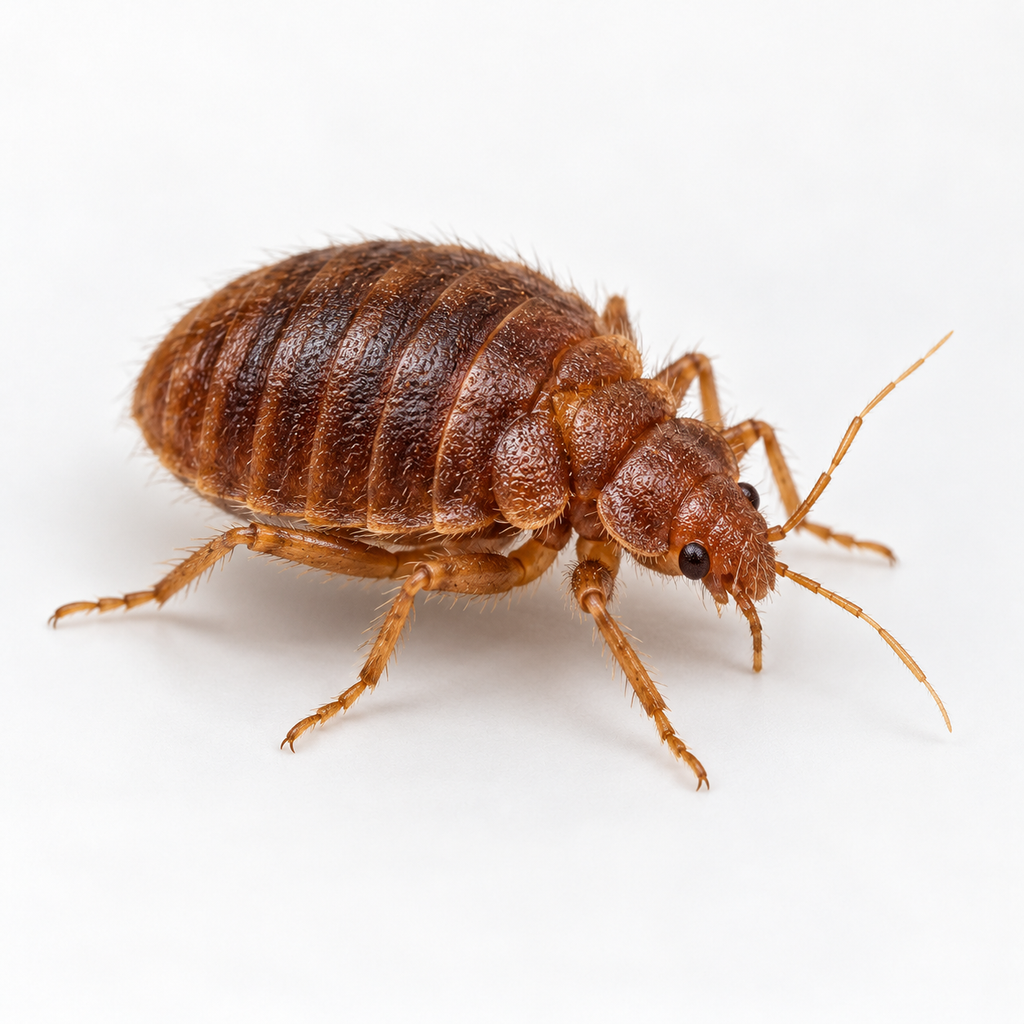
Finding bed bugs can be upsetting. Many people immediately assume it is a sign of poor hygiene or poor housekeeping.
It is not.
Bed bugs are often described as vampire hitchhikers. They travel with people, luggage, clothing, furniture and personal belongings. They can be found in homes, hotels, holiday accommodation, care settings and just about anywhere people spend time sleeping or resting.
Tell us what you have found. If possible, send a photograph. We can often help identify whether the evidence is consistent with bed bugs and explain the most sensible next step.
What have you noticed?
Common signs include:
- Small black spotting around beds, headboards and furniture
- Live insects
- Cast skins
- Tiny white eggs
- Blood spots on bedding
- Reports of bites or irritation, particularly after sleeping
Bites alone do not confirm a bed bug problem.
Many different conditions and insects can cause bites or skin reactions. Some people react strongly to bed bug bites, while others show little or no reaction at all.
If possible, send us a photograph of the insect or evidence you have found.
Bed bugs are normally found close to where people sleep. Typical harbourages include:
- Headboards
- Bed frames
- Mattress seams
- Divan bases
- Bedside furniture
- Sofas and armchairs
- Skirting boards
- Electrical sockets
- Picture frames
- Curtain folds
One of the most common findings is black spotting around a headboard, bed frame or mattress.
Why is it happening?
Bed bugs feed on blood, usually while people are asleep.
They locate hosts using body heat and carbon dioxide produced when we breathe. After feeding, they return to hiding places close to the bed or seating area.
Bed bugs exhibit a behaviour known as thigmotaxis. In simple terms, they prefer hiding in tight spaces where their bodies remain in contact with surrounding surfaces. This is why they are commonly found in bed frames, headboards, furniture joints, cracks and crevices close to where people sleep.
Because they spend most of their time hidden, finding the insects themselves can sometimes be difficult. Black spotting, cast skins and other signs are often more obvious than the live insects.
Bed bugs are not caused by poor hygiene.
Clean homes get bed bugs. Hotels get bed bugs. Holiday lets get bed bugs. Care homes get bed bugs.
The issue is usually how they arrived, not how clean the property is.
They are commonly introduced through travel, luggage, overnight bags, second-hand furniture, clothing and personal belongings.
This is one reason we often refer to them as vampire hitchhikers.
How Guardian approaches a bed bug problem
Effective bed bug treatment involves more than applying an insecticide.
Preparation, inspection, treatment and follow-up all matter.
Before treatment begins, we can issue our bed bug preparation guide explaining how to prepare rooms, bedding, furniture and personal belongings. Ask us for it. It is not a public download on this page.
Our approach follows three practical stages.
1. Suck it
We begin by physically removing as many bed bugs as possible using specialist vacuum equipment.
This provides immediate reduction of live insects and helps prepare harbourages for further treatment.
2. Steam it
We use a professional superheated dry steam system to apply dry steam directly into bed bug harbourages.
The heat provides immediate control and can affect all life stages that are directly contacted. Steam does not treat what it does not reach.
3. Treat it
We apply professional insecticides and desiccant dusts into appropriate harbourages and hiding places.
Modern bed bugs have developed resistance to some insecticides, which is why we do not rely on a single treatment method.
Using several approaches together provides a better result than relying on one product alone.
Treatment choices and safety
Where a liquid insecticide is applied, people and pets must remain outside the treated rooms for a minimum of four hours. We will explain the preparation, precautions and safe re-entry time before treatment begins.
If you would prefer not to have a liquid insecticide used, tell us when you contact us. We can offer an alternative approach using physical removal, superheated steam and an approved desiccant dust. This may require more time or further visits, which we will explain before you decide.
What happens when we visit?
The technician begins with a detailed inspection to identify active harbourages and the areas most affected.
Treatment is then targeted towards those locations.
You will receive clear advice about preparation, what has been found, what has been treated, what to expect next and follow-up visits.
After the visit you will receive a report explaining the findings and recommendations. Domestic customers and one-off jobs receive an electronic report. Planned commercial contracts receive electronic visit reports together with the agreed site records or pest management folder. Any price quoted will be plus VAT.
Will one visit be enough?
Usually not.
Guardian’s normal bed bug programme is approximately three treatments, usually carried out three to four weeks apart.
Bed bug eggs can survive treatments that affect active insects. Follow-up visits help target newly emerged bed bugs before they can reproduce.
Most successful bed bug control programmes involve thorough preparation, more than one visit, ongoing monitoring and customer cooperation.
The success of the programme depends as much on preparation and follow-up as it does on the treatment itself.
We do not offer a guarantee on bed bug treatments. Preparation, access, the level of activity, movement between rooms or neighbouring properties and reintroduction can all affect the result.
Commercial considerations
Bed bugs regularly occur in hotels, guest houses, holiday lets, serviced accommodation, care settings, staff accommodation and housing.
The treatment approach is usually the same as in domestic properties.
Bed bugs can cause complaints, rooms taken out of use and reputational concerns, so early action is important.
Where a room cannot remain occupied for monitoring, specialist carbon dioxide units may sometimes be used to help draw bed bugs from hiding. This is a separate service and may not be appropriate in every situation.
Frequently asked questions
Are bed bugs caused by poor hygiene?
No. Bed bugs are not attracted to dirt. Clean homes and well-maintained properties can still develop bed bug infestations.
Should I stop using the room?
Usually no. We normally recommend continuing to use the room unless your technician advises otherwise.
Bed bugs are attracted by body heat and carbon dioxide from people. Empty rooms can make monitoring and control more difficult.
Can you identify bed bugs from a photograph?
Often, yes. A clear photograph of an insect, cast skin or spotting can sometimes help us identify whether the evidence is consistent with bed bugs.
Why do I need a preparation guide?
Preparation gives us access to the places where bed bugs hide. Without proper preparation, treatment becomes less effective. Ask us and we will issue the guide.
Why do you recommend three treatments?
That is Guardian’s normal programme. Bed bug eggs can survive many treatments. Multiple visits help break the life cycle.
Do bed bugs spread disease?
They are not generally regarded as significant disease vectors, but they can cause irritation, skin reactions, disturbed sleep and considerable stress.
Should I throw my mattress away?
Not usually. In many situations the mattress can be retained and protected using a suitable mattress encasement.
Do you recommend mattress encasements?
Yes. We often recommend them because they help protect the mattress and make future inspection and monitoring easier.
Will I need to leave the treated room?
If a liquid insecticide is applied, people and pets must remain outside the treated rooms for a minimum of four hours. Your technician will confirm the safe re-entry time.
Can you treat without a liquid insecticide?
Yes. We can use physical removal, superheated steam and an approved desiccant dust. We will explain how this approach differs and whether it is suitable for the property.
Tell us what you have noticed
You do not need to confirm that you have bed bugs before contacting us.
Tell us what you have seen, found or experienced. If possible, send us a photograph.
We will explain the most sensible next step and can issue our bed bug preparation guide before treatment begins.