You switch the kitchen light on and something runs behind the units. A letting agent receives reports of cockroaches behind a fridge. A landlord takes a property back and finds cockroaches that were not declared.
One of the biggest mistakes is assuming a cockroach problem will stay small. By the time you see them regularly they may already be inside units, appliances and service routes.
Tell us what you have noticed. We will explain the most sensible next step. Prices are plus VAT.

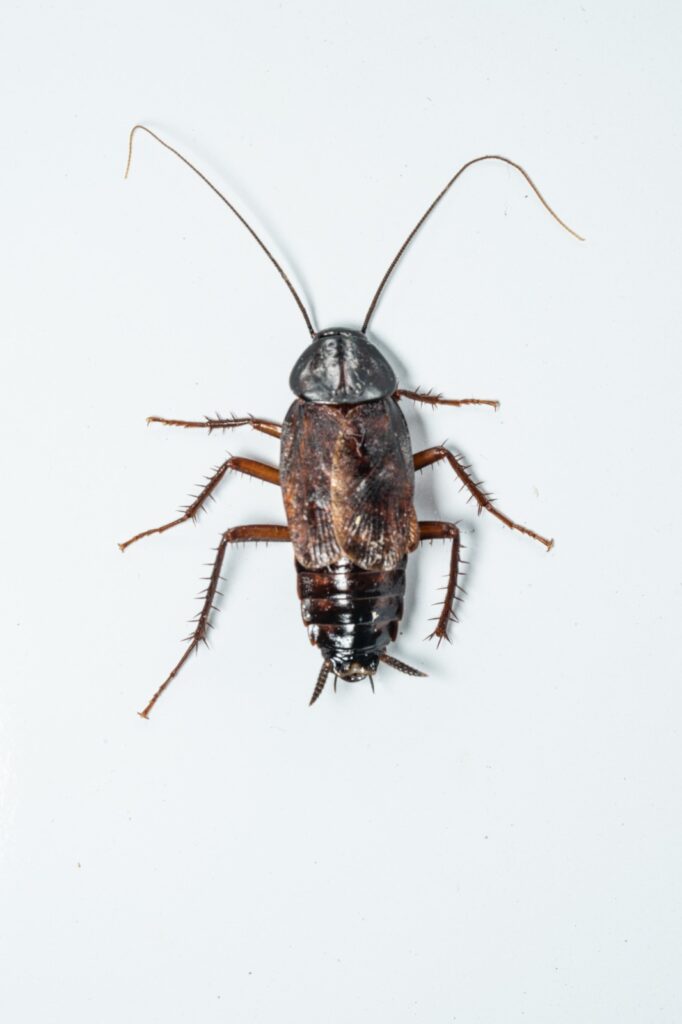


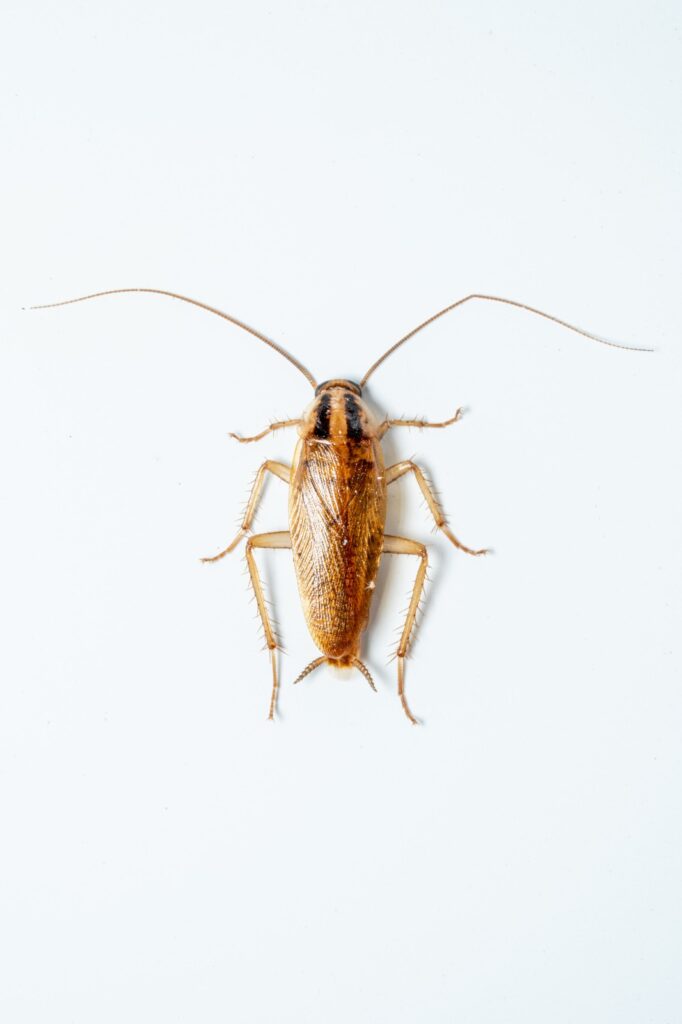
Photos above are credited to Wade Environmental
What have you noticed?
Common signs include:
- Cockroaches running when lights go on
- Activity around cookers, fridges and kitchen units
- Small dark droppings
- Egg cases and cast skins
- Activity around service ducts, plant rooms or neighbouring flats
- Repeated sightings in an HMO, flat or takeaway kitchen
Cockroaches are mostly active at night and hide in cracks, equipment and other sheltered spaces by day. Many infestations are established before the first insect is seen.
A clear photograph can help us identify the species. German and Oriental cockroaches are two of the species most often encountered in UK buildings. Brown banded, American and Australian cockroaches occur less often.
Why is it happening?
Cockroaches are often brought into a building. Common routes include food deliveries, cardboard packaging, second-hand appliances, furniture, laundry, luggage and equipment moved between sites. They can also spread from adjoining properties through service routes and, particularly with Oriental cockroaches, may enter through drainage systems or from outside. A clean kitchen can still get them.
German cockroaches favour warm areas such as kitchens. They hide in very small gaps and breed quickly. The female carries the egg case until shortly before the young hatch, which helps protect them. They can spread between flats, HMOs and adjoining areas through pipework and service voids.
Oriental cockroaches are larger and darker. They are more often found in basements, boiler rooms, ducts, plant rooms and around drainage. The female carries the egg case for a short time before depositing it in a sheltered place. They breed more slowly, but an infestation can still become large.
At any one time there may be adults, nymphs of different sizes and hidden egg cases. That is why seeing nothing for a few days is not the same as the job being finished.
Understanding the life cycle
Cockroaches undergo incomplete metamorphosis.
Unlike flies, moths or beetles, there is no larval or pupal stage.
The life cycle is:
- Egg
- Nymph
- Adult
When the eggs hatch, the young cockroaches look like small versions of the adults.
As they grow they pass through a series of developmental stages called instars, shedding their outer skin each time they moult.
At any one time an infestation may contain adults, nymphs of different sizes and hidden egg cases.
This is one of the reasons cockroach control often requires monitoring and follow-up visits even after visible activity appears to have stopped.
How Guardian approaches a cockroach problem
This is usually a programme, not one spray.
Inspection and monitoring
We identify the species, assess how far the infestation has spread, find likely harbourages and consider whether adjoining units or shared service routes are involved. Monitoring traps help show where activity is concentrated and guide the treatment and follow-up.
Baiting
Customers sometimes use the word fumigation to describe any spray or fogging treatment. True fumigation uses gas and is not normally part of Guardian’s cockroach treatment.
Our usual approach involves inspection, monitoring, targeted baiting and follow-up. Gel bait is often the main treatment. Cockroaches share harbourages, so bait can affect insects that never fed directly on the original placement.
Other treatment methods
Where appropriate, treatment may also include an insect growth regulator, a residual insecticide treatment, vacuuming or steam. The methods are selected according to the species, level of activity, building and risks present. We do not apply every method to every infestation.
We also advise on hygiene, food storage, reducing hiding places and any building defects that may be helping the infestation spread.
What happens when we visit?
The first visit begins with an inspection of the species, extent of activity, likely harbourages, hygiene, adjoining risks and the most suitable way to monitor the infestation. Where treatment can safely and properly begin, we normally start it during that visit.
There is usually no complicated preparation. Keep the affected area as clean as practical and put foodstuffs away before we arrive. If anything else is needed, we will explain it.
There is normally very little aftercare. If a particular treatment requires a precaution, or something should not be cleaned or disturbed, the technician will explain this during the visit.
After the visit, domestic customers and one-off commercial customers receive an electronic report explaining what was found, what was done and what happens next. Planned commercial contracts receive electronic visit reports together with any other agreed site records.
Will one visit be enough?
Usually not.
Hidden egg cases can still hatch after the adults you can see have gone. Flats, HMOs, hotels and commercial kitchens commonly need follow-up, particularly where adjoining areas or shared service routes are involved.
There is no standard interval that suits every infestation. The number and spacing of visits are judged according to the cockroach species, the extent of the problem and what the monitoring shows. We will explain the programme for that particular building.
We do not guarantee that cockroaches will never return.
Commercial considerations
Cockroaches matter in commercial kitchens, food production, restaurants, hotels, care settings, hospitals, HMOs and apartment blocks.
They can contaminate food, utensils and food preparation surfaces, as well as creating audit, customer and reputation concerns. Early reporting usually makes the problem easier to investigate and contain before it spreads through service routes or adjoining areas.
Commercial work can be discussed over the phone. We will explain whether the information provided is enough to plan the next step or whether we need to visit and inspect first. Prices are plus VAT.
Frequently asked questions
Do cockroaches mean the place is dirty?
Not necessarily. They are often introduced on packaging, deliveries, appliances or other items. A clean property can still develop a cockroach problem.
Which cockroaches are most often found in UK buildings?
German and Oriental cockroaches are the two we encounter most often. Correct identification matters because the different species behave differently and may need a different approach.
Are cockroaches a health risk?
Yes. Cockroaches can contaminate food, utensils and food preparation surfaces as they move between waste, drains and feeding areas. Their droppings, cast skins and other material can also aggravate allergies or asthma in some people.
Can the problem spread quickly?
Yes, particularly with German cockroaches in warm kitchens and buildings with adjoining flats, shared pipework or service voids.
Why am I still finding cockroaches after treatment?
Hidden egg cases can still hatch, and activity may continue in adjoining or inaccessible areas. This does not automatically mean the treatment has failed. Monitoring and follow-up show what is still happening and what needs to be done next.
Do you fumigate?
Not normally. True fumigation uses gas. Guardian’s usual cockroach work involves inspection, monitoring, targeted treatment and follow-up, with the methods selected for the particular infestation.
What should I do if I see one?
Tell us as soon as possible. One visible cockroach can be the first sign of a hidden population. A clear photograph and details of where and when it was seen can help us identify the likely species and next step.
Tell us what you have noticed
Tell us where it was seen, whether you have seen more than one, whether it is a kitchen, flat, HMO or commercial site, and how long it has been happening. Photographs can be very useful.
We will explain the most sensible next step.