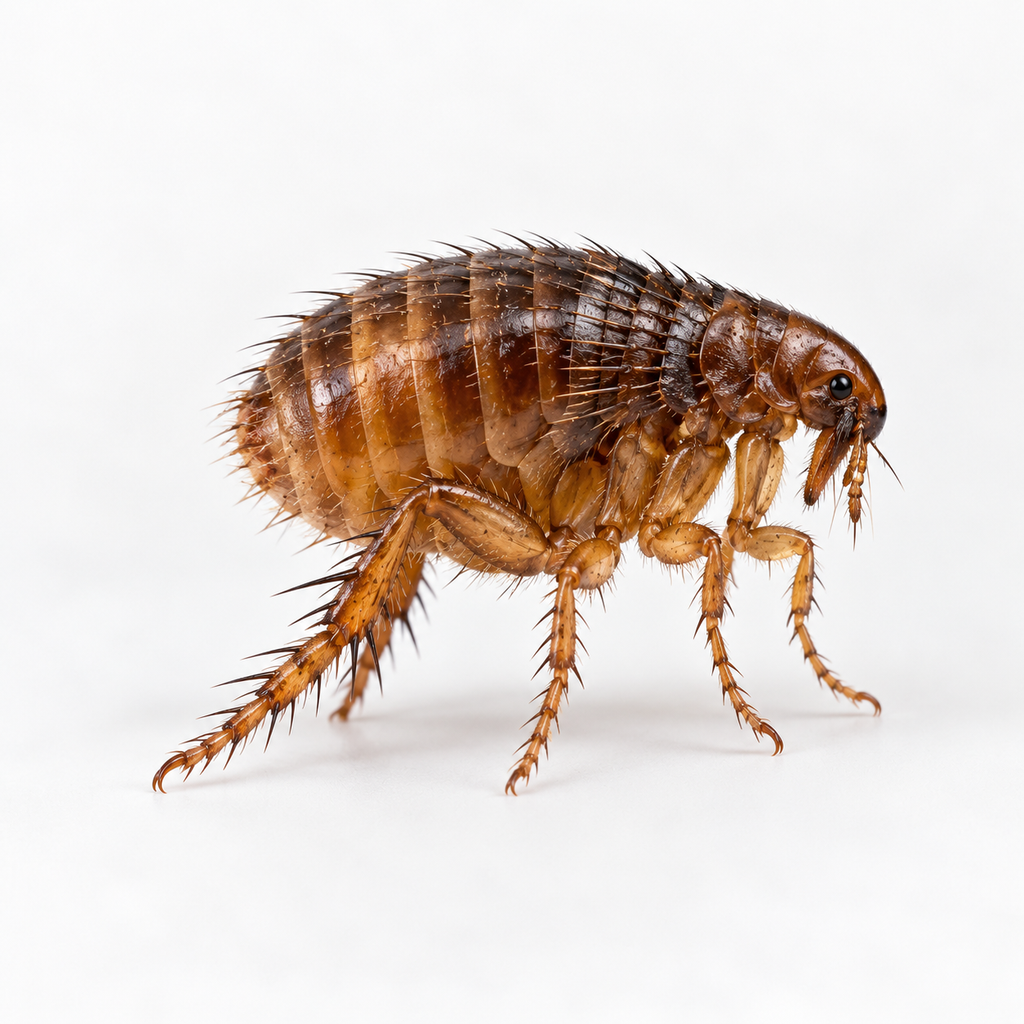
Something is biting you. Itchy bites around the ankles. The dog or cat will not stop scratching. Tiny insects jumping from the carpet. Children being bitten while playing on the floor.
You may have moved into a property and everyone is getting bitten, even though there are no pets in the house. Or you may have returned from a holiday and the bites have suddenly started.
The fleas you can see are often only a small part of the infestation. The bites are the symptom. The problem is the population developing in the property.
Tell us what you have noticed. We will explain the most sensible next step. Prices are plus VAT.
What have you noticed?
Common signs include:
- Bites around the ankles and lower legs
- Dogs or cats scratching excessively
- Tiny insects jumping from carpets or furniture
- Fleas in pet bedding
- Fleas appearing after moving in, after a holiday or after a property has stood empty
- Children being bitten while playing on carpets
- Activity in bedrooms and lounges
- Fleas appearing after wildlife has been in a loft or underfloor void
Many customers never see a flea. They simply know that something is biting them. Bites alone do not prove that fleas are present, so we consider what has been happening and look for physical evidence before deciding on the appropriate treatment.
Most household flea jobs involve cat fleas. Despite the name, they feed on cats, dogs and people. Human fleas are uncommon in the UK.
Bird fleas, hedgehog fleas and other wildlife fleas also occur. Where activity is linked to wildlife or a bird nest, we also look for the source and how fleas are reaching the occupied part of the building.
Why is it happening?
Adult fleas live on an animal and feed on blood. Their eggs usually fall into carpets, pet bedding, furniture and cracks in floors.
The eggs hatch into larvae, which later spin a cocoon. A fully developed flea can remain protected inside the cocoon until signs of a possible host, including movement and vibration, trigger it to emerge.
That is why a property that has stood empty, or a home you return to after a holiday, can suddenly appear to produce fleas. The infestation may already have been present and waiting for activity to resume.
You do not need to have a pet now. Fleas can be left by a previous occupier’s pet, wildlife in a loft or underfloor void, or a bird nest associated with the building.
The adults you see are only part of the problem. Eggs, larvae and pupae can all be present at the same time. Control means interrupting that life cycle, not simply killing the fleas visible on the carpet.
How Guardian approaches a flea problem
Preparation, treatment of the property, treatment of any pets through your veterinary practice, investigation of the source and aftercare all matter.
Preparation
Before treatment we generally ask you to vacuum thoroughly, clear under beds, take toys and stored items off the floor where practical, and expose as much carpet as possible. Empty the vacuum into a sealed bag and place it in an outside bin.
Wash pet bedding thoroughly. Tell us about children, pregnancy, allergies, respiratory conditions, fish tanks and any other animals in the property so we can give you the correct preparation instructions.
Speak to us before lifting or disposing of carpets because treatment is normally carried out first.
Pets
Treating the property while leaving the pet untreated rarely works.
Dogs and cats should receive a suitable flea treatment at the same time as the property is treated. Discuss the product with your veterinary practice. Guardian does not supply or apply treatments to pets.
Treatment
We normally apply a professional residual insecticidal spray to the affected areas. Once it has dried, a residual deposit remains on the treated surfaces.
An insect growth regulator is also used as part of the treatment to help interrupt the development of immature flea stages and break the life cycle.
People and pets must remain out of the treated rooms for a minimum of four hours after the treatment has been completed. We will explain ventilation and when it is safe to go back into the rooms before we start.
Aftercare
Keep pets on the treatment programme agreed with your veterinary practice.
Avoid vacuuming or washing treated areas for about 10 to 15 days unless we tell you otherwise.
Seeing some fleas after treatment does not automatically mean the job has failed. Fleas can continue to emerge from protected pupae and then come into contact with treated surfaces.
What happens when we visit?
The visit begins with understanding the problem and looking for evidence where possible. We ask about pets, previous activity, whether the property has been empty, whether the household has been away, possible wildlife sources, preparation and any health or safety concerns.
Where the property has been prepared and treatment is appropriate, we normally treat the agreed areas during that visit. We explain what has been done, the precautions to follow and what to expect afterwards.
Domestic customers and one-off jobs receive an electronic report. Planned commercial contracts normally receive electronic visit reports together with the agreed site records or pest management folder.
Will one visit be enough?
One treatment may be enough where the property has been prepared properly, any pets have been treated and the aftercare is followed.
However, we do not promise this. Fleas can continue to emerge from protected pupae after treatment, and some infestations need further treatment.
We will explain what is realistic for your property and when you should contact us if activity continues. We do not guarantee that fleas will never return.
Commercial considerations
Fleas can affect let properties, holiday accommodation, hotels, care settings, premises associated with animals and empty or repossessed housing stock.
The source is not always obvious where previous occupiers, pets, wildlife or bird nests have been present. We consider the source as well as the occupied areas where people are being bitten.
The same principles apply: prepare the premises, treat the environment, arrange suitable treatment for any animals through a veterinary practice and follow the aftercare.
Commercial work can normally be discussed over the phone. Prices are plus VAT.
Frequently asked questions
Do I need a pet to have fleas?
No. Many infestations involve pets, but fleas can also be left by a previous occupier’s pet, wildlife or a bird nest associated with the building.
Are cat fleas only found on cats?
No. Cat fleas feed on cats, dogs and people and account for most domestic flea problems.
Do bites prove that I have fleas?
No. Bites and itching can have several causes. Tell us what has been happening and whether any insects, droppings or other evidence have been found.
Why am I getting bitten around the ankles?
Fleas often jump from flooring and carpets onto the lower part of the body.
Why do fleas appear in empty houses?
Fully developed fleas can remain protected inside their cocoons and emerge when people begin moving around the property again.
Why am I still seeing fleas after treatment?
This is often caused by fleas continuing to emerge from pupae that were already present. It does not automatically mean the treatment has failed. Follow the aftercare and contact us if activity continues beyond the period explained by the technician.
How long must we stay out after treatment?
People and pets must remain out of the treated rooms for a minimum of four hours after treatment has been completed. Follow the ventilation and return instructions given by the technician.
Should I vacuum after treatment?
Not immediately. Avoid vacuuming or washing the treated areas for about 10 to 15 days unless the technician tells you otherwise.
Do my pets need treating as well?
Yes, if pets are present. The property and the animals need to be dealt with together. Ask your veterinary practice which product is suitable.
Can I get rid of fleas by only treating the dog or cat?
Usually not once fleas have become established in the property. Eggs, larvae and pupae are normally present in carpets, furnishings and the places where the animal rests.
Tell us what you have noticed
Tell us who is being bitten, whether pets are present, when it started, whether the property has been empty or you have been away, and whether fleas or other evidence have actually been seen.
Clear photographs or short videos are useful where an insect has been found. We will explain the most sensible next step.