Hundreds of flies at upstairs windows. Flies coming out of the loft on a warm winter day. The same side of the house, every autumn.
Many people think something has died in the loft, or that the flies are breeding in the house. Most of the time neither is true.
True cluster flies complete their life cycle outside the building. Their larvae develop as parasites of earthworms in the soil. The adults move into lofts and voids to spend the winter, so the breeding source is not normally something that can be treated at the property.
That is why this problem is managed rather than promised as a permanent cure.
Tell us what you have noticed. We will explain the most sensible next step. Prices are plus VAT.
What have you noticed?
Common signs include:
- Large numbers of flies at upstairs windows
- Flies gathering on one side of the house, often the sunny side
- Flies appearing on warm winter or early spring days
- Hundreds or thousands of flies in a loft
- Flies emerging from roof voids
- The same problem returning every year
- Dead flies on windowsills
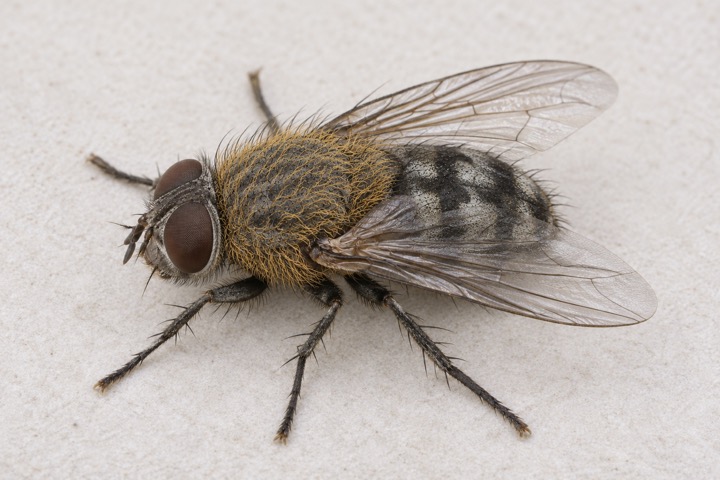
Several different insects may gather in buildings for the winter. These can include true cluster flies, green cluster flies, autumn flies, yellow swarming flies and occasionally lacewings. They may create a similar problem for the customer, but they do not all have the same life cycle. Correct identification matters before treatment is recommended.
Flies at an upstairs window are not automatically cluster flies. Blowflies and other species can point to a different source.
Why is it happening?
True cluster fly larvae develop on earthworms in fields and pasture. The adults spend the warmer months outside before looking for a sheltered place to overwinter in autumn. Lofts, roof voids, wall cavities and spaces around windows can all suit them.
They are not moving in to feed or breed. When it stays cold they remain inactive. Sunshine or a warm spell wakes them and they move towards the light, which is why they may appear at upstairs windows in the middle of winter.
Some buildings are chosen year after year while neighbouring properties may be left alone. South facing elevations often show the most activity because they warm first.
This is different from blowflies. With blowflies we look for a possible carcass or other breeding source. With cluster flies the source is usually outside the property and beyond practical treatment.
How Guardian approaches a cluster fly problem
The aim is to reduce the number of flies in the building and make the infestation manageable. It is not a promise that the building will be empty the following autumn.
Identification
We first look at the insects and the pattern of activity. This matters because blowflies and other species may need a different investigation or treatment.
Timing
Treatment is often most useful once the main autumn influx has entered the building. The best timing depends on the weather and the activity at the property.
If the infestation is already unacceptable, we can discuss whether earlier treatment is appropriate and explain what can realistically be achieved.
Practical reduction
Small numbers can often be removed with a vacuum cleaner. Where practical, sealing gaps around window frames and other likely entry points may reduce future activity. Proofing is unlikely to prevent every fly from entering and must not interfere with ventilation.
Lofts and roof voids
Most treatment takes place in the spaces where the flies are gathering, such as lofts, roof voids and sometimes wall or window voids.
The method depends on the building, access and the size of the infestation. It may include a suitable residual insecticide, smoke generator or ULV fogging treatment, used in accordance with the product label.
Windows and rooms
Where flies are coming through into rooms, a suitable residual treatment may be applied around affected windows. Dead or dying flies on windowsills afterwards can be expected.
Bats
Lofts used by cluster flies can also be used by bats. Bats and their roosts are legally protected. Guardian will not carry out treatment that could disturb or harm bats. If bats, signs of bats or a known roost are present, treatment may have to stop while appropriate advice is obtained.
What happens when we visit?
We look at where the activity is occurring, which side of the building is affected, safe access to the loft or roof void, the species involved where practical, suitable treatment options and any evidence of bats.
Before treatment, we will explain any preparation, ventilation, access restrictions and re-entry time that applies.
We do not normally return to vacuum up dead flies after treatment. In exceptional circumstances, where a loft is boarded and the flies are accessible, a separate chargeable return visit may be agreed. We do not vacuum dead flies from loose loft insulation because doing so would also remove or disturb the insulation. If this additional service is suitable, we will explain what can realistically be cleaned and the charge before it is agreed.
After the visit you will receive a report explaining what was found, what was done and any recommendations. Domestic customers and one-off jobs receive an electronic report. Planned commercial contracts normally receive electronic visit reports together with the agreed site records or pest management folder.
Will one visit be enough?
One treatment may substantially reduce the flies that are accessible and present at the time. Flies hidden in inaccessible voids may continue to appear afterwards.
No treatment stops the next generation developing in the surrounding countryside. Some properties need further work depending on the construction, numbers, timing and weather.
We do not guarantee that cluster flies will never return.
Commercial considerations
Cluster flies can cause a seasonal nuisance in schools, offices, hotels, care settings, churches, historic buildings and visitor sites.
They are generally a nuisance rather than a pest associated with poor hygiene. However, live or dead flies in customer areas, food handling areas or sensitive premises can still lead to complaints and audit concerns.
We can normally discuss the first step over the phone. A survey may be needed before treatment or a quotation can be confirmed. Prices are plus VAT.
Frequently asked questions
Are cluster flies the same as blowflies?
No. They have a different life cycle and do not normally breed in dead animals. Correct identification matters because blowflies may point to a carcass or another breeding source.
Do cluster flies breed in my loft?
No. True cluster flies complete their life cycle outside. They use lofts and other sheltered spaces to spend the winter.
Why are all the flies on one side of the house?
They often gather on the warmest, sunniest elevations and enter through gaps in those parts of the building.
Why do they come back every year?
Some buildings are used as overwintering sites again and again. Treatment deals with the activity at the property but does not remove the outdoor source.
Can cluster flies be permanently stopped?
Not usually. Proofing may reduce the number getting in, but it is seldom possible to seal every route without affecting the building’s ventilation.
Why are they appearing in winter?
A sunny or mild day can wake flies that are already in the loft or other voids. They then move towards light and may appear at upstairs windows.
Are cluster flies dangerous?
They do not bite and are not normally regarded as an important health risk. They can still be upsetting and large numbers of live or dead flies can cause a significant nuisance.
Do cluster flies damage the property?
They do not normally damage the structure or contents. Large accumulations can leave staining and dead flies around windows or in loft spaces.
Should I vacuum them up?
You can vacuum up individual flies in accessible rooms. Vacuuming alone will not deal with a large infestation hidden throughout a loft or roof void.
Will Guardian remove the dead flies?
Not as part of the normal treatment. In exceptional circumstances, where the loft is boarded and the flies are accessible, a separate chargeable return visit may be agreed. We do not vacuum dead flies from loose insulation because doing so would remove or disturb the insulation as well as the flies.
Will I need to leave the property during treatment?
That depends on the treatment method and product used. We will explain any preparation, ventilation and re-entry time before the work begins.
Tell us what you have noticed
Tell us which side of the property is affected, whether the flies are mainly upstairs, whether the problem happens every year and whether you have seen activity in the loft. Photographs can help.
We will explain the most sensible next step.