Have you found holes or thinning patches in a wool carpet or rug, perhaps under a heavy sofa or cupboard? Have natural-fibre clothes been damaged in a wardrobe, or have you spotted small larvae or silken cases around the room?
Clothes moth larvae can damage carpets, rugs, clothing and other materials made from animal fibres. The damage often starts in quiet, undisturbed places, so it may not be noticed until a carpet or favourite item has already been affected.
The two main clothes moth species we deal with are the common clothes moth, Tineola bisselliella, and the case-bearing clothes moth, Tinea pellionella. The common clothes moth is the one we encounter most often.
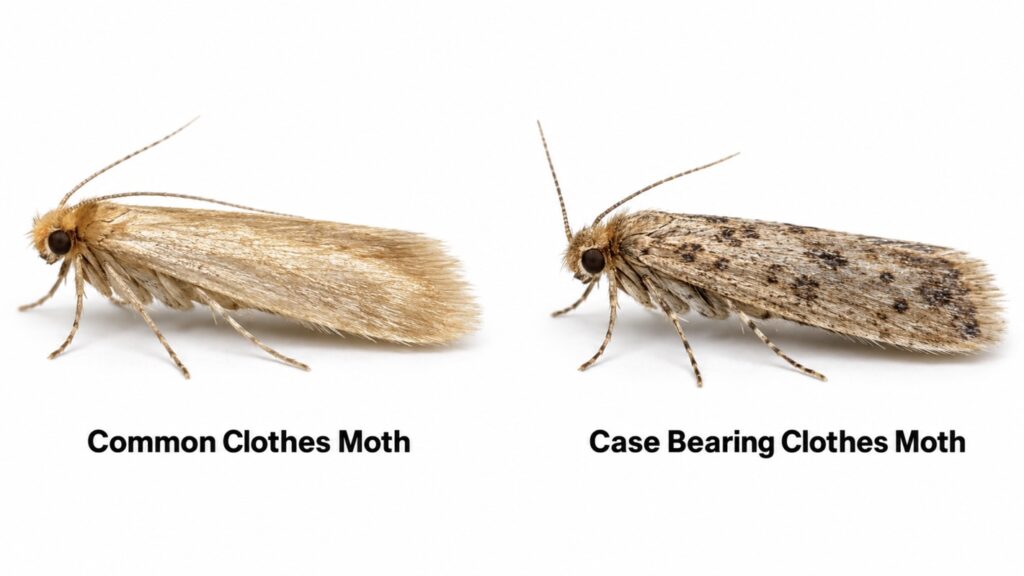
What clothes moths look like
Adult clothes moths are small and can be easy to overlook. Common clothes moths are usually pale golden brown. Case-bearing clothes moths are generally darker and more mottled.
The larvae are more useful to look for than the adult moths. Common clothes moth larvae may leave silken threads or tunnels as they feed. Case-bearing clothes moth larvae make a portable silk case, adding fibres from the material they are feeding on. This can help the case blend in with a carpet, rug or fabric.
The larva comes out of the case to feed and pulls the case along as it moves. You may sometimes find cases attached to a wall or hanging from a ceiling, a little like stalactites.
The two species can be difficult to identify from a brief sighting. An adult moth alone may not show where the damage is coming from, so it helps to check for larvae, cases, silk and the pattern of damage.
Biology and life cycle
Clothes moths develop through four stages: egg, larva, pupa and adult.
The female moth lays eggs in places where the newly hatched larvae can reach suitable food. The larvae feed and grow before pupating and emerging as adult moths. It is the larvae, not the adult moths, that cause damage to textiles.
Larvae feed on animal-derived materials, including wool, fur, feathers and hair. They may also damage other natural materials, including silk. In a carpet made from a wool and synthetic blend, the wool fibres can be eaten while the synthetic fibres remain.
The time taken to develop varies with temperature, available food and conditions in the property or premises. This means activity can continue for some time before the problem becomes obvious.
Why are clothes moths in my home?
Clothes moths are more likely to develop where their larvae can find suitable material and remain undisturbed. In homes, this may include wool carpets and rugs beneath heavy furniture, natural-fibre clothing in cupboards, upholstered furniture and carpet edges that are difficult to vacuum.
A few adult moths do not necessarily show where the larvae are feeding. Finding the source means checking the damaged items and the quiet areas around them.
What damage can clothes moths cause?
Larvae can leave holes, grazed areas or thinning patches in wool carpets, rugs, clothing and upholstery. Damage may be concentrated beneath furniture or in other places that are rarely moved or cleaned.
If a carpet or rug has extensive damage, treatment cannot replace the missing fibres. Depending on its condition and value, replacing the carpet with a suitable synthetic one may be more practical. We can assess the activity and help you consider the options.
Domestic clothes moth treatment
Every home and infestation is different. We assess what has been affected and how widespread the activity appears to be before advising on the next step.
For a typical domestic treatment, thorough vacuuming is important, particularly beneath heavy furniture, along carpet edges and in other dark, undisturbed areas. Where an insecticidal treatment is appropriate, we can carry it out and explain any preparation and safety instructions.
Clothes moth monitors are usually placed around two weeks after an insecticidal treatment. They help us assess whether moth activity is continuing and whether further treatment should be considered. Monitoring can continue after that, with significant catches or ongoing activity informing the next steps.
Commercial clothes moth management
Clothes moths can affect premises where susceptible materials are stored, made, displayed or used. This can include bedding manufacturers, woollen mills, textile businesses, upholstery premises, museums, stately homes and rug makers. Carpets, rugs, bedding, textiles and curtains may all be affected.
Commercial work starts with a site survey. The scale of the activity, the materials involved, the layout of the premises and the way the business operates all affect the programme. A spray treatment may have limited value if larvae are concealed within stored textiles or other materials.
Depending on the site, we may recommend insecticidal treatment, an ultra-low-volume or fogging treatment to reduce adult moth activity, or a planned insecticide-free biological programme. Where needed, treatments can be arranged for evenings or weekends to fit the operation of the premises.
For a biological programme, we can supply and set up pheromone systems designed to disrupt mating, alongside releases of microscopic parasitic wasps that target moth eggs. These wasps are introduced in planned waves, with monitoring and further releases as needed. This is a longer-term approach and takes time to assess.
An insecticide-free biological programme cannot be combined with insecticidal treatment that would harm the beneficial wasps. We will assess the site, explain the available approaches and recommend a programme suited to the materials and the business. If a treatment requires people to leave the premises, we will provide the product-specific instructions and re-entry advice.
Reducing the risk of damage
Regular vacuuming helps remove fibres and debris that can support larval activity. Pay particular attention to carpet edges, spaces beneath heavy furniture and other areas that are easy to miss. Check natural-fibre clothing before storing it and keep stored items clean and protected.
If you find damage, larvae or cases, note where they are and which materials are affected. Treating only the adult moths you can see may leave the source of the damage undiscovered.
When to contact Guardian
Contact us if you are finding repeated damage, larvae or cases, or if valuable carpets, rugs, clothing or commercial materials are affected. We will assess the situation, explain the available options and advise on the most sensible next step.
For commercial premises, a survey is needed to understand the scale of the problem and plan the control and monitoring programme.
Speak to a pest control professional
Tell us what you have found and where the damage is occurring. We will discuss the problem and explain what to do next.